Australia Declared War on Emus — and Lost
Two soldiers, two machine guns, ten thousand rounds of ammunition. The emus won.
At a glance
- Dates
- 2–8 November 1932, then resumed
- Force
- Major G.P.W. Meredith, 2 soldiers, 2 Lewis guns
- Ammunition
- About 10,000 rounds
- Emus killed
- Around 986 claimed — roughly 10 rounds per bird
After the First World War, Australia settled returning soldiers on farmland in Western Australia. It was hard country, and the harvest of 1932 was turning into the only thing standing between those families and ruin.
Then roughly 20,000 emus arrived.
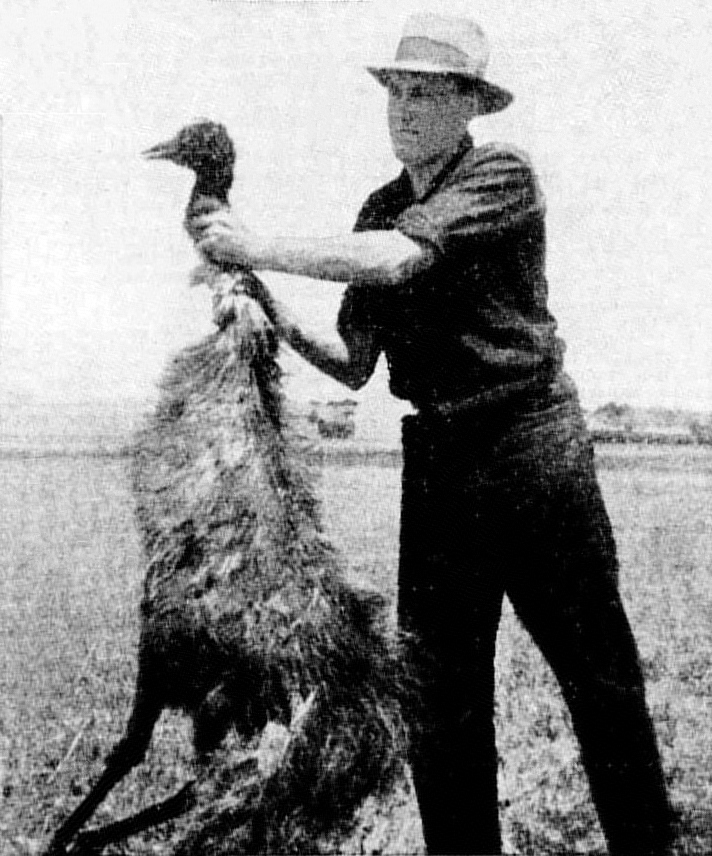
Emus are large, fast, and — crucially — they had discovered that cleared farmland with wheat and reliable water was an excellent place to live. They trampled fences, which let rabbits in. They ate the crops. They were, in the words of the settlers, a plague.
The farmers asked for help. The government responded by deploying the military: Major G.P.W. Meredith of the Royal Australian Artillery, two soldiers, two Lewis light machine guns, and about 10,000 rounds of ammunition.
The first engagement was on 2 November 1932. The soldiers set up an ambush near a dam. The emus scattered. Emus can run at close to 50 km/h and, when machine-gunned, do not charge or stand — they break into small groups and sprint in every direction. The gunner managed to kill perhaps a dozen birds before the rest were gone.
They tried mounting a machine gun on a truck. The truck couldn't keep up on rough ground, and the emus outpaced it.
The operation was called off after about a week, then restarted at the farmers' request. By the end, Meredith reported around 986 emus killed for roughly 10,000 rounds — about ten rounds for every bird.
He also wrote, with what sounds like reluctant professional respect, that the emus' ability to scatter and regroup made them the equal of any military opponent he had faced.
The emus were never defeated by the army. What eventually worked was unglamorous: a bounty system, sustained over years, that eventually removed hundreds of thousands of birds. The lesson, if there is one, is about the mismatch between a weapon designed for a battlefield and a flock of enormous birds that run.
Every claim in this file is checked against primary sources — how we verify. Spotted an error? Tell us.
Get the next file before it's public
One story a week, chosen from the archive. The kind you repeat at dinner and nobody believes.
One file a week. Opens your mail app, pre-filled.
More History
AllThe Dead Man Who Fooled the Nazis
Operation Mincemeat used one corpse, a fake major, and a set of letters to move an entire German division.
Boston's Tidal Wave of Molasses
A tank of syrup burst in 1919 and sent a wave through the streets at 35 mph. The smell lasted for decades.
The Librarian Who Smuggled 350,000 Manuscripts
When extremists seized Timbuktu, one man spent months moving a civilisation's records out of the city in metal trunks.