The Night Amateurs Beat the Soviets
A team of American college students against the most dominant hockey team on earth. Everyone knew the score before it started. Everyone was wrong.
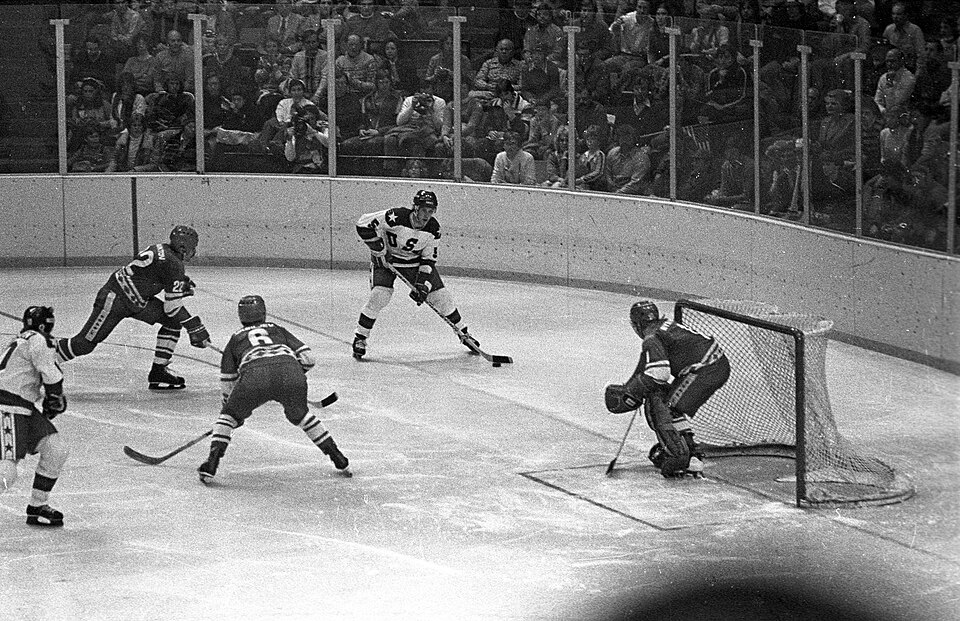
At a glance
- Date
- 22 February 1980, Lake Placid
- Score
- United States 4, Soviet Union 3
- Soviet record
- Four consecutive Olympic golds, 1964–1976
- Outcome
- The US beat Finland two days later to take gold
The Soviet Union had won four consecutive Olympic ice hockey golds, from 1964 to 1976. In 1979, a Soviet select team had beaten a squad of NHL all-stars 6–0 at Madison Square Garden. They were, by any measure, professionals playing in a tournament officially reserved for amateurs.
The United States sent college students, coached by Herb Brooks, who had spent months making them skate a system designed for a team that had no business out-skating anyone.
On 22 February 1980, in Lake Placid, they played each other. The Americans had been beaten 10–3 by the Soviets in an exhibition days earlier.
The Soviets led 2–1, then 3–2 going into the third period. With about ten minutes left, Mark Johnson scored to tie it. A minute and a half later, Mike Eruzione — the captain — put the United States ahead 4–3.
There were still ten minutes to play. The Soviet coach, Viktor Tikhonov, uncharacteristically left his star goaltender Vladimir Myshkin in and pulled him late. The Americans survived. Jim Craig made 36 saves.
Al Michaels, calling the game, said the line that made it permanent: "Do you believe in miracles? Yes!"
The United States still had to beat Finland to win gold, and did, 4–2, coming from behind. But the game everyone remembers is the one that wasn't the final.
What makes it durable isn't really the upset. It's the specific texture of it: college players in a tournament that had, for years, quietly been won by a professional state programme. The 1980 result didn't end Soviet hockey — they won gold again in 1984 — but it broke the assumption that the outcome was knowable in advance.
Herb Brooks, whose system was the actual reason it worked, said afterwards that he didn't want his players to be remembered as the team that beat the Soviets. He wanted them to be the team that won the gold medal. Nobody listens to that part.
Every claim in this file is checked against primary sources — how we verify. Spotted an error? Tell us.
Get the next file before it's public
One story a week, chosen from the archive. The kind you repeat at dinner and nobody believes.
One file a week. Opens your mail app, pre-filled.
More Sport
AllWho Actually Snubbed Jesse Owens?
Everyone knows Hitler refused to shake his hand. Owens himself named a different man.
The Marathon That Doesn't Count
Eliud Kipchoge ran a marathon in 1:59:40. It isn't a world record, and the reasons why are fascinating.
The Marathon Won Barefoot
Abebe Bikila's shoes didn't fit. He ran the Olympic marathon without them — and won it, under a monument to fascism.